
Phila
the bombshell aunt who sailed to India

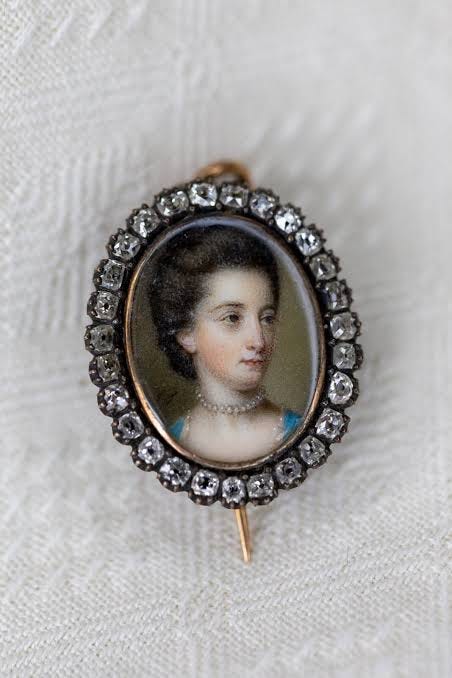
You have no reason to know this, so I’ll tell you: I’m in the middle of a massive research project. Initially, this had nothing to do with Jane Austen, and I didn’t plan on merging my two interests in any way. Except fate had some fun surprises in store.
To give you a brief synopsis, my other project has to do with British East India Company women during the 1700s, pre-Raj (and pre-full-blown imperialism). I learned women were paid by the EIC to travel to Indian forts with the intention of marrying employee-traders stationed abroad. I did a double-take when I saw this in print. Because why would a woman risk life and limb to cross the ocean and settle in a foreign land she knew nothing about? I needed to know more, ASAP.
As historical fiction is my favorite mode of learning history, I searched for a novel on the topic. Alas, none existed. Angry that these brave and perhaps foolish women of a bygone era were being ignored, I stubbornly decided that I would do the hard (and hated) work of sitting with straight history books (not my favorite form of learning) and write their stories myself. So that’s what I’ve been up to. It’s been the most challenging work I have ever undertaken.
Someone asked me if I’m really the best person to tell this story. Of course I’m not. But I’m determined to become her. I will learn until my mind has expanded to form this narrative authentically, and then I will have brilliant friends and experts critique and edit and change the story until it’s something real and worthwhile. Because it’s a story I’m desperate to read. And after all this hard labor, I want to be the person to bring it forth.
All of that to say, in this massive pile of research I’m under, I came across Jane Austen’s name.
“How?!” you cry.
Yes, yes. I’m as surprised as you. It turns out that Jane had a dear aunt who was one of these adventurous women of the EIC, Philadelphia Austen.
Phila was orphaned very young, along with Jane’s father, and sent to live with her cousins. An uncle paid for her to become a milliner’s apprentice at fifteen years old, when she moved from Kent to Covent Garden, learning to sew for five years. At the end of her apprenticeship, she had grown into something of a smokeshow and decided against becoming a tailor. Without a dowry, even with looks in her favor, she had little chance of catching a husband in England.
Instead, she took the opportunity the East India Company was providing British ladies of unfortunate circumstances to sail to India if said ladies would marry officers upon arrival. It was a chance for marriage and status that English soil couldn’t provide her. Her uncle again made some connections for her, getting her betrothed to an EIC surgeon abroad, Tysoe Hancock, and off she went.
This was no small undertaking, and many didn’t survive the journey, let alone life in India.
Phila thrived.
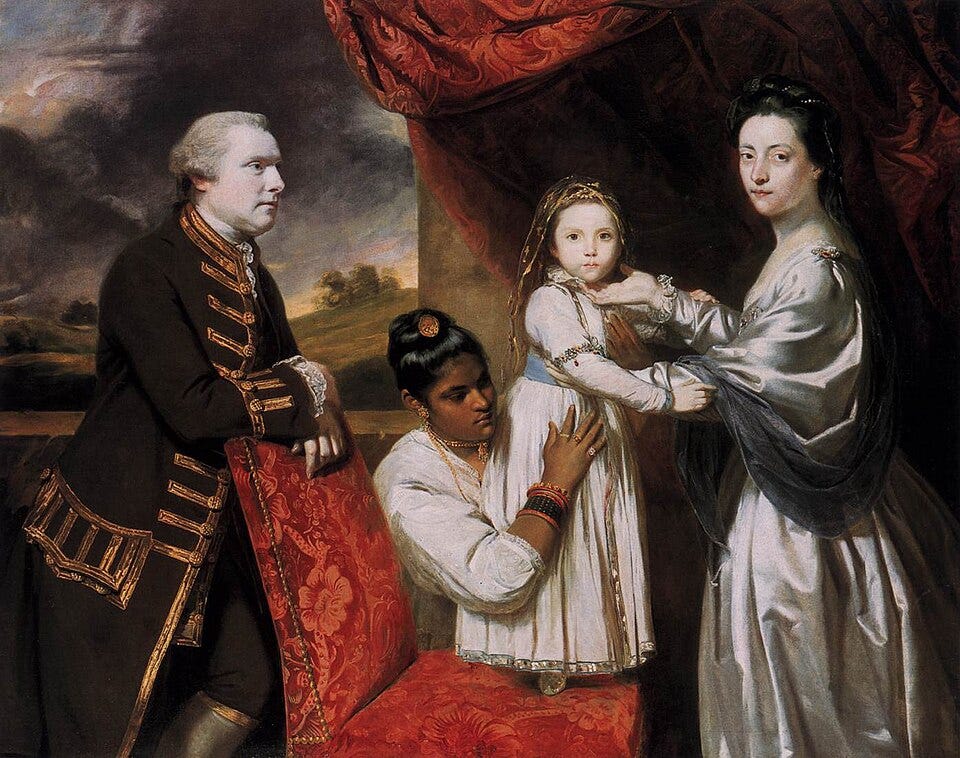

She made friends with servants and other EIC wives, gaining status among the Company employees by becoming close with the well-established Warren Hastings.
There are rumors that their relationship went well beyond friendship and was a long-lasting affair. In fact, most people at the time believed he fathered her only child, a daughter. His behavior after her death certainly could lend itself to that thought, but there is no hard proof either way.
I’m currently reading a newly published biography on Phila by Jan Merriman, and Phila’s story is a fascinating one. Notably, Jane herself wrote in her teenage years of brides sent off to marry old British men in India in her unpublished work, Catherine, or The Bower, showing sympathy for the women whose circumstances demanded such a match.
The main character is clearly inspired by Phila, whose beauty and wit made an impression on the young writer. The more I learn about these women who used their allure to survive and attempted to gain status and therefore security, the more I wonder at how all of history is woven in a single large fabric.
I’m also curious about the Indian women Phila befriended and their stories. About the children of interracial couples and what happened to them as racism grew. About how this trade in India devolved into the reign of terror the Raj brought.
So I dive back into my mountain of old letters, journals and history books, hoping to come out with a gem to rival the Koh-i-Noor. (That’s the world’s largest diamond, mined in India and currently away from its origins in the British Crown Jewels.) Wish me luck, I’ll need more than Phila seemed to have on her voyages to tackle this undertaking.
Such serendipity! The universe works in mysterious ways, as long as we are attune to it. I can't wait to read your book!
Fabulous! I had no idea. Such fun to follow your own incredible journey. ❤️